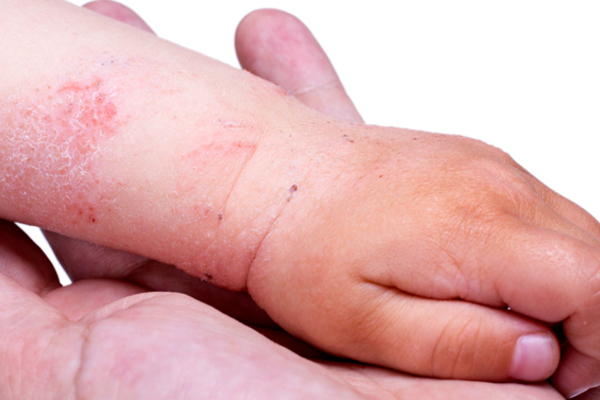
What is eczema?
Eczema is a chronic superficial inflammation of the skin characterised by itching, flaking and/or rash, affecting around 15 million people in the UK. The various types of eczema include: atopic dermatitis, contact dermatitis, dyshidrotic eczema, nummular eczema, seborrheic dermatitis, and stasis dermatitis.
The causes of eczema are poorly understood but it is thought that genetics and environmental factors play a key role in its development. There are similarities between eczema and other atopic allergies in that the immune system is reacting against an allergen which then leads to an inflammatory response.
What are the symptoms of eczema?
For most people, eczema's main symptom tends to be itching. This can range from mild to moderate, but can become severe if inflammation is high and this can naturally lead to excessive scratching.
Other symptoms can include:
- Dry, sensitive skin
- Inflamed, discolored skin
- Rough, leathery or scaly patches of skin
- Oozing or crusting
- Areas of swelling
Not all of these symptoms are neccessary for the diagnosis of eczema and the condition can come and go depending on diet, stress and environmental factors such as exposure to chemicals or irritants.
Conventional treatments include anti-histamines, steroids and topical creams than can cause unwanted side effects and usually only provide symptomatic relief without addressing the underlying causes.
The treatment of eczema using Chinese Medicine
Chinese herbal medicine and acupuncture have long been used to treat various skin conditions. There is a framework of understanding in Chinese Medicine that diagnoses the particular patterns associated with the various presentations of eczema. This might include constitutional deficiencies of the Spleen, Kidney and Lungs, Inflammation or Heat, the accumulation of fluids and Damp and the notion of 'wind' in the skin which translates loosely to the itch that can be so distressing.
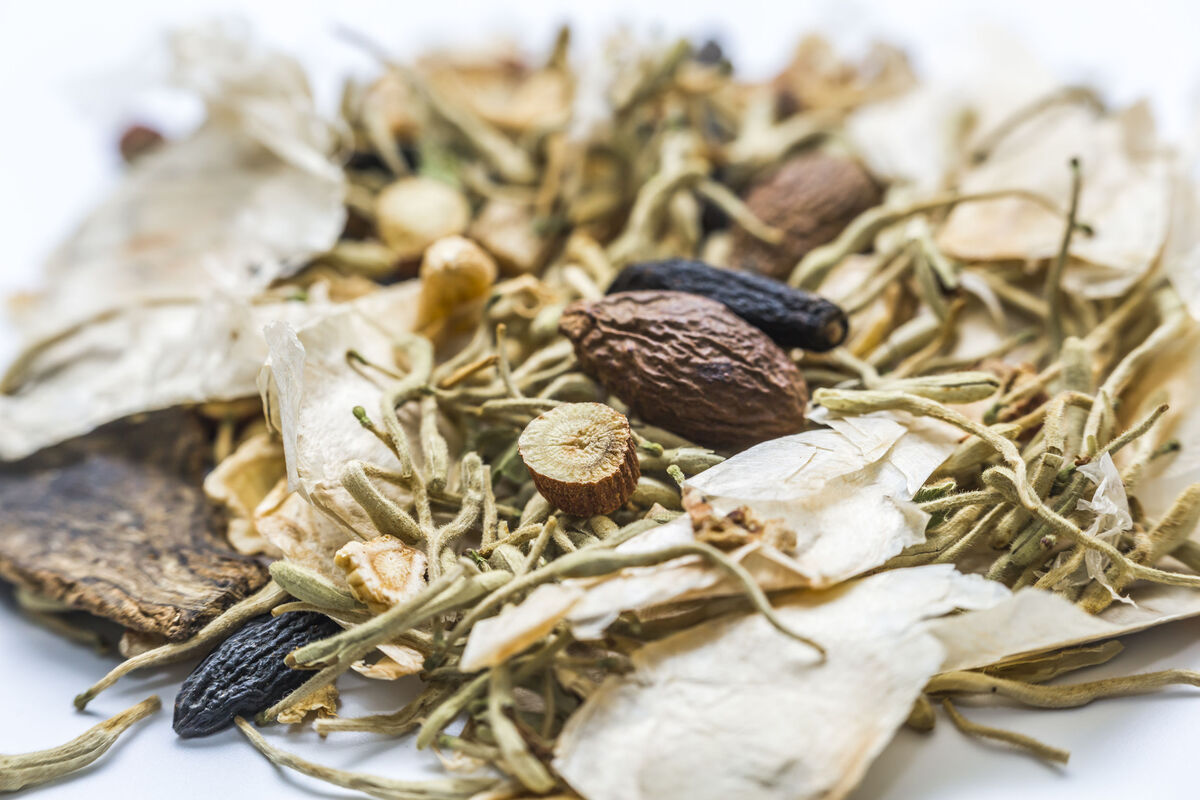
Herbs are administered internally as decoctions, powders, teas or pills and externally in the form of lotions, creams and washes that can soothe irritated skin, balance the immune response and encourage healing.
The following pages provide an insight into the treatment of eczema with Chinese Herbal Medicine including the extensive research into this condition.
We hope that patients suffering from this distressing chronic condition will feel confident in seeking the help of one of our many highly qualified RCHM practitioners for the treatment of their eczema or dermatitis.
Effective eczema treatment side-lined with loss of patient choice
Charles Buck - Sept 2020
Chinese medicine (CM) was almost unknown in the UK in 1989 when doctors at London’s Great Ormond Street Hospital published trials on over 1000 eczema patients of a ten-herb brew called Zemaphyte.
Best practice in CM tailors treatment to each individual - a process that requires a long specialist training. The dermatologists did not have this, so a fixed formula was used and the results published in the British Medical Journal. These trials showed that over 70% of patients benefited. Standard care for eczema is often unsatisfactory, so there was excitement from patients and from the medical world.
Stumbling across this treatment, and knowing nothing of the sophistication of China’s medical tradition, the medics imagined that one herb must be giving the effect, the rest must be hokum. A single substance in there might be identified and marketed as a drug - in the medical mind a drug is by definition a single chemical. To find out what that chemical was the Zemaphyte formula was sent for analysis.
Meanwhile, patients found out. Thousands flocked to the handful of Chinese herb clinicians practising at the time. I was prescribing 3-5 tons of CHMs annually for eczema and for other skin problems - and getting results. Unfortunately, the ongoing lack of state regulation also allowed untrained pretenders to step in to meet the demand.
Genuine CHM physicians relied on arduous training that teaches how to examine each case individually and skilfully match the treatment to the person.
Angry, red and inflamed skin needs more herbs to clear heat, rashy-itchy patches needs herbs for wind, if there is pus then herbs for fire-toxins are included. Skin that is weepy and worse in the elbows and knees needs more herbs for dampness, and if the skin is dry and cracked then herbs to moisten the skin or improve blood micro-circulation are given.
A mix of all these things is often best and the practitioner’s expertise is about getting the balance right. As treatment progresses things change and so the prescription is altered, the doses tapered off and eventually stopped. Many then remain clear for months or years, some only reappear decades later.
The medical world found this glimpse into a parallel medical universe all a bit strange. Used to seeing things simply as our scientific medicine versus those unscientific folk remedies, in CM they had stumbled across something far more sophisticated than they expected. Ironically, it was in standard dermatology that things were simple - there is an inflammatory state called eczema that you hit with steroid creams. There is no reason to consider the wider clinical picture as was routine for Chinese clinicians.
For patients this new kid on the block meant there was now a viable choice, something from a deeply rooted culture and something with evidence of effectiveness.
The scientists studying the research formula reported back saying they’d been unable to identify the active ingredient, it really was a package of substances working together to correct all the things that go wrong in eczema. Some herbs had antihistamine effects, some were anti-inflammatory, some cleared trapped fluids, some helped skin repair and local microcirculation.
Where the herb tradition taught that eczema consisted of various mixes of wind, dampness, heat, fire toxicity, poor skin nutrition. Pharmacology said it was allergy, exudate, inflammation, secondary infection and impaired microcirculation.
You say tomato - I say tou mei dou…!
The formula really was a coherent strategy that made sense in terms of China’s traditional theories as well as from the viewpoint of modern pharmacology. But the doctors were disappointed; patenting a new treatment requires finding a single novel chemical entity.
No matter how beneficial for patients, with intellectual property rules as they are the treatment could not get a medicines license. So it was shelved.
The CHM people, however, were still going strong!
Now the media reporting changed and stories appeared telling people that CHM was risky. They pointed to the 1% of the trial patients who had briefly raised liver enzymes, something that is normal in the population anyway.
Then, serious adverse events were reported from a slimming clinic in Belgium where doctors with zero training in CHM injected homemade drug cocktails, adding in a Chinese herb they had mis-identified.
A tragic incident certainly, but one that should properly be classified as misadventure or worse, as malpractice.
CHM clinicians were also accused of cheating by using steroids treatments.
A few dubious clinics had mistakenly imported an over-the-counter (OTC) cortisone cream available in pharmacies in China - no mention of herbs on the packaging whatsoever. Similar creams are also available OTC from UK Chemists shops. What was presented as a health fraud was an error made by some low-grade UK clinic - people who were unable to read the packaging of the product.
In this way doctors and patients were persuaded that Chinese medicine was risky and disreputable. The real CM professionals, those with degree training and an ethical outlook, had an excellent safety record and did not use dubious products.
Media narratives said the Government should “clamp down” on unregulated practice. In truth, acupuncturists and CM clinicians have lobbied government for decades to put statutory controls in place to stop untrained people from practising and have been repeatedly refused – even when a 2-year formal parliamentary investigation recommended regulation.
The losers in all the medical politics are the patients who are led away from a viable, safe and evidence-based healthcare choice, not only for eczema but many other conditions poorly served by modern medicine.
Patient Case of Eczema
Kathleen Powderly
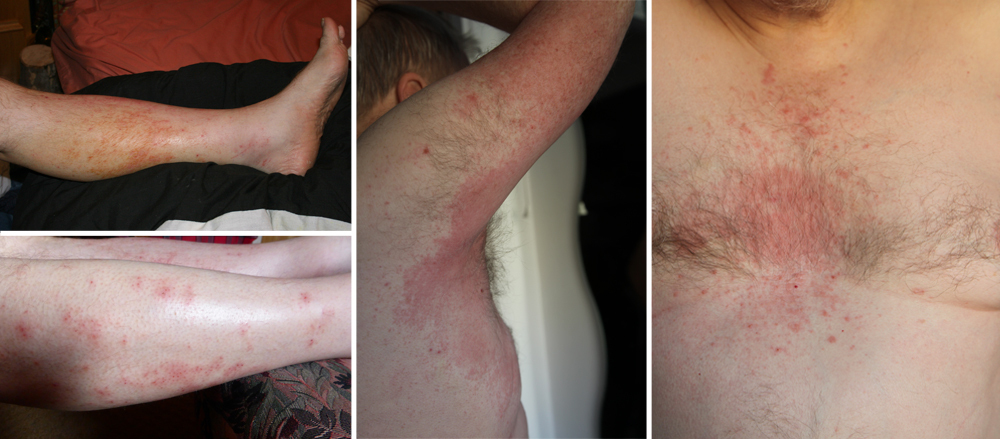
This case is being kindly shared by Alan Watt (62), owner of a picture framing company who was diagnosed with discoid eczema in spring 2014. He has a family history of psoriasis and allergy related issues affecting his nose and sinuses.
His GP prescribed Betnovate, a steroid cream, to alleviate the inflamed itchy patches on both shins. However over the course of the summer and autumn, the redness and itching extended to both sides of the legs. The eczema then progressed to most of the body with extreme itching experienced on the chest, arms, legs and ankles. A course of Prednisolone tablets was prescribed followed by anti-histamines Fexofenadine during the day and a more sedating anti itch tablet, Atarax, at night.
Two courses of antibiotics were also required to treat an infection affecting the skin in both ankles diagnosed as cellulitis. By the winter, a clear discharge was draining from the inflamed areas of the skin on the legs which now had an orange peel appearance. The itching had become more persistent on the arms, wrist creases, legs and ankles. This irritation had become so severe that bleeding and disruption of sleep had resulted from the severity of the itching. Digestion had also become an issue with bloating and discomfort as a result of the increasing consumption of medication. Standing in a workshop as well as running a business with all the commitments required was becoming increasingly challenging. Alan returned to his GP and received a repeat course of the same Prednisolone tablets and anti-histamines followed this time by a referral to Aberdeen RoyaI Infirmary’s Skin Clinic. The appointment was expected to take some time so Alan decided, while he was waiting, to consult a Member of the Register of Chinese Herbal Medicine, Kathleen Powderly (pictured below), to see if he could receive a more effective course of treatment.
Alan’s feedback speaks for itself:
"Life had become dominated by my skin condition so consulting Kathleen at this stage was an opportunity to seek a different approach as the treatment received so far was clearly not working.
After a consultation which involved a detailed history and pulse taking, along with careful observation of the tongue, I was given a mixture of herbal granules to take three times per day in warm to hot water, which is very similar to making a cup of coffee. I saw Kathleen for regular reviews and received additional advice about my diet and lifestyle. I was delighted to see a reduction in my symptoms and a sustained improvement. By the time I received my hospital appointment my skin was sufficiently improved not to warrant any standard treatment which was a relief because of the increasing side -effects from the prescribed tablets and steroid cream which eventually would weaken my skin. I was still keen to attend this appointment to share my positive experience but the skin consultant expressed no enthusiasm for either my improved condition or form of treatment. He criticised the GP’s choice of medication as the reason for my lack of progress.
My skin condition continued to improve and has remained stable ever since with very intermittent minor flare ups controlled by a short course of Chinese Herbal Medicine with the same easy to take granules. I have been delighted by the care and the ongoing support I receive and my renewed confidence to enjoy life both at work and leisure.
I recommend seeing a professionally trained practitioner from the Register of Chinese Herbal Medicine after enduring such discomfort over a long period of time."
Research into the treatment of eczema with Chinese Medicine
Chinese Herbal Medicine and effective and safe treatment of atopic dermatitis (eczema)
In this ground breaking review, Yan et al (2020) explore the vast number biological mechanisms displayed by Chinese Herbal Medicine in the safe and effective treatment atopic dermatitis, a condition which effects up to 25% of children and 2-3% of adults. What truly sets this research apart is the exploration of the varied mechanisms of action in different Chinese Herbal Formulae, supporting the individuation of treatment based up on the experience of the person.
Yan et al (2020) available here: https://www.sciencedirect.com/science/article/pii/S0753332220303346
Chinese Herbal Medicine a multiple mechanism model in the prevention of atopic dermatitis (eczema)
When researchers looked to define the active ingredient in a Chinese Herbal Formulae for childhood eczema in the 1990s, they sought one key mechanism. Sadly this lead to missed opportunities in helping children with severe skin conditions such as atopic dermatitis. What research is increasingly finding is that Chinese Herbal Formulae possess multiple mechanisms as stated by Man, Hu and Elias (2019) “AD preventive herbs improve stratum corneum function, AD severity score and scratching via divergent mechanisms including improving epidermal permeability barrier function, lowering IgE levels, inhibiting inflammatory cell infiltration, cytokine expression and immune defence depending on the type of herbal ingredients utilized”
The Chinese Medical model has long recognised the multitude of mechanisms of herbal formulae, observed and discussed in the context of a natural empiricism based upon knowable, clinically relevant signs and symptoms.
Man et al (2019) Herbal Medicines Prevent the Development of Atopic Dermatitis by Multiple Mechanisms
https://link.springer.com/content/pdf/10.1007/s11655-015-2438-1.pdf
Topical Chinese Herbal Medicine in the treatment of eczema
Chinese Herbal Medicine is subject to ongoing research and investigation into its safety and efficacy. Studies are frequently carried out to investigate specific formulae and their mechanisms of action. Although the one size fits all approach taken in research does not a match the diversity and complexity of a clinical practice based upon generations of natural empiricism, it provides a greater understanding which can be utilised in modern day practice.
In a randomised control trial researchers found that the a topical ointment made using indigo naturalis used over a six week period was both safe and effective in the treatment of mild to severe atopic eczema. Indigo naturalis can come from the Isatis tinctoria, commonly known as woad (Lin et al, 2020)
https://www.sciencedirect.com/science/article/abs/pii/S0378874119327898?via%3Dihub
Further recent research:
- Huang et al (2019) Efficacy and safety of Run Zao Zhi Yang capsule on chronic eczema: a multiple-centre, randomized, double-blind, placebo-controlled clinical study.
https://www.tandfonline.com - Srivastava et al (2020) Effect of Traditional Chinese Medicine (TCM) in moderate-to-severe eczema in clinic and animal model: beyond corticosteroids.
https://www.jacionline.org
- Lee et al (2019) Soshiho-Tang, a Traditional Herbal Medicine, Alleviates Atopic Dermatitis Symptoms via Regulation of Inflammatory Mediators.
https://www.frontiersin.org - Ma et al (2020) Efficacy and safety of Qinzhuliangxue decoction for treating atopic eczema: a randomized controlled trial
https://pubmed.ncbi.nlm.nih.gov/32389012/
- Zheng et al (2019) Yu-Ping-Feng-San ameliorates recurrent allergic inflammation of atopic dermatitis by repairing tight junction defects of the epithelial barrier
- Huang (2019) Can We Treat Atopic Dermatitis without using Corticosteroids? - https://innovationinfo.org/articles/JPI/JPI-116.pdf


